
Dienstag, 31. Mai 2016
Rupert Neudeck, death of a Green Helmet

Mittwoch, 30. Dezember 2015
Into 2016: change makers
 2015 seems to end with dull echoes on the next months to come:
battles in Helmand with the spectre of a '2nd Kunduz', the young generation
continuing to leave the country. But whoever continues to go and spend time in Kabul and in Afghanistan's provinces
will be able to witness work of those parts of the society though who believe in change
and are working hard to improve living conditions and keep hope afloat.
My favorite this year in this context is the 2nd annual Students' theater festival (from nov. 8th to 11th 2015)
eager and pragmatic in spirit to win back an audience after the murderous attack
on a theater performance in Esteqlal lycée last december.
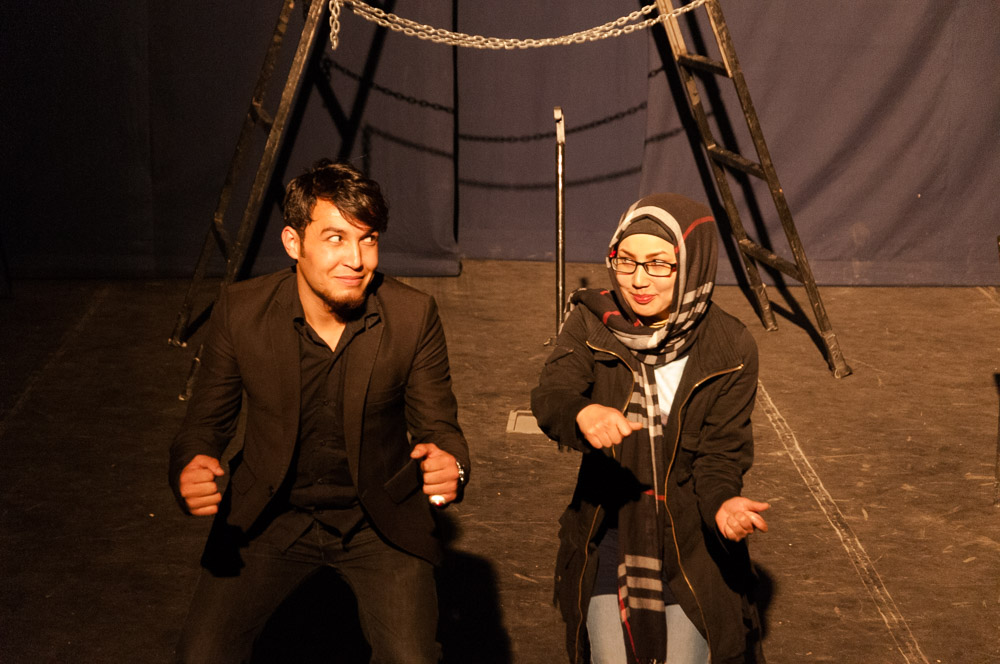
Here are some pictures I took during this year's festival, including some rehearsals that students partly perform in private rooms due to the scarcety of official rehearsal rooms.
2015 seems to end with dull echoes on the next months to come:
battles in Helmand with the spectre of a '2nd Kunduz', the young generation
continuing to leave the country. But whoever continues to go and spend time in Kabul and in Afghanistan's provinces
will be able to witness work of those parts of the society though who believe in change
and are working hard to improve living conditions and keep hope afloat.
My favorite this year in this context is the 2nd annual Students' theater festival (from nov. 8th to 11th 2015)
eager and pragmatic in spirit to win back an audience after the murderous attack
on a theater performance in Esteqlal lycée last december.
Here are some pictures I took during this year's festival, including some rehearsals that students partly perform in private rooms due to the scarcety of official rehearsal rooms.
 The Festival, without any exaggeration, can be seen as a means by youths and academics who had orgainzed it, to try and keep a young generation in the country rather than to have them migrating abroad due to a lack of security and a deep economic crisis. The Festival was in fact the first event in which actors would appear publically on stage again as a sign to fight terrorism and let arts and cultural indentity revive.
 Just about a year ago, a suicide bomber had exploded himself during a running theater performance at Esteqlal Lycée, Kabul, killing one person and wounding many. For this year's Students's Festival, security precautions were taken, with Theater students and staff strict and searching spectators for their own security. With an audience of some 350 mostly young people daily on all four days, many females came to see the plays.
 It is to say that acting on stage for women in Afghanistan remains diffictult. Women speaking out loud in public are considered a taboo in Afghanistan's male-dominated society. They face with restrictions in their theater roles (a female addict cannot play out her role to the full degree without possible consequences) and professional careers. Laughing out loud in public is considered unusual and offensive to many a traditional Afghan man.
 Kabul's Faculty of Fine Arts, who hosted the Student's Theater Festival - on the contrary - took an open approach again this year, challenging the conservative fringe of society, even though the person in the picture above, playing an attractive US-female somewhere in Afghanistan, is a male Student and actor.
See also my coverage here.
Kabul's Faculty of Fine Arts, who hosted the Student's Theater Festival - on the contrary - took an open approach again this year, challenging the conservative fringe of society, even though the person in the picture above, playing an attractive US-female somewhere in Afghanistan, is a male Student and actor.
See also my coverage here.

Samstag, 5. Dezember 2015
100 years Afghan-German relations: The Afghanistan we deserve
 It is commonly known amongst many educated Afghans that a first delegation of the German Reich, military and diplomatic, arrived to Kabul in 1915 with the idea to win the Afghan King in the fight against the British Empire. But the plans for a German-led Jihad, enlisting different muslim countries and troops, against the Britisch influence in the Middle East and in Central asia, are not common with the German educated population nor even with most intellectuals.
Why that is so, is an interesting question, discussed on the backstages of an Afghan cultural week in Berlin, initiated by the German Foreign office this week with regard to 100 years of official relations between Berlin and Kabul. It was not by chance that Ashraf Ghani extended his Europe stay for the occasion. In a way, he didn't have a choice: the problem of Afghan refugees
being too pertinent for EU and German domestic policies, the question was whether Berlin and Kabul would be able to agree on taking back Afghan refugees that are rejected in their quest for
asylum in Germany. Though there still seems to be no concrete outcome on the issue after Ghani's visit, the (general) German support for the economical emergency program the government of national unity has announced can hardly mask that the overriding wish of Berlin is that Afghanistan solves the crisis largely with domestic means. Though changes in this may come and are counted in,
as the crisis – economical and security wise – will develop in the months ahead.
Inseperably linked with each other all along the Culture Week, I have looked into what relates
the art pieces, exhibitions and festival events of the official program with the behind scene talks
and with the overarching policies of Western donors so far on the question of culture in post-conflict states.
______________________________________________
Essay WDR3 / German National Radio on Art & Politics in 100 years of German-Afghan relations
Deutschlandfunk Audio /the ongoing migration from Kabul and Afghanistan to Germany
and the European Dream of the younger Afghan generation
Deutschlandfunk / Audio on political theater between conflict and refugee crisis
Deutschlandfunk / Audio on Who is Daesh/ISIS in Afghanistan?
It is commonly known amongst many educated Afghans that a first delegation of the German Reich, military and diplomatic, arrived to Kabul in 1915 with the idea to win the Afghan King in the fight against the British Empire. But the plans for a German-led Jihad, enlisting different muslim countries and troops, against the Britisch influence in the Middle East and in Central asia, are not common with the German educated population nor even with most intellectuals.
Why that is so, is an interesting question, discussed on the backstages of an Afghan cultural week in Berlin, initiated by the German Foreign office this week with regard to 100 years of official relations between Berlin and Kabul. It was not by chance that Ashraf Ghani extended his Europe stay for the occasion. In a way, he didn't have a choice: the problem of Afghan refugees
being too pertinent for EU and German domestic policies, the question was whether Berlin and Kabul would be able to agree on taking back Afghan refugees that are rejected in their quest for
asylum in Germany. Though there still seems to be no concrete outcome on the issue after Ghani's visit, the (general) German support for the economical emergency program the government of national unity has announced can hardly mask that the overriding wish of Berlin is that Afghanistan solves the crisis largely with domestic means. Though changes in this may come and are counted in,
as the crisis – economical and security wise – will develop in the months ahead.
Inseperably linked with each other all along the Culture Week, I have looked into what relates
the art pieces, exhibitions and festival events of the official program with the behind scene talks
and with the overarching policies of Western donors so far on the question of culture in post-conflict states.
______________________________________________
Essay WDR3 / German National Radio on Art & Politics in 100 years of German-Afghan relations
Deutschlandfunk Audio /the ongoing migration from Kabul and Afghanistan to Germany
and the European Dream of the younger Afghan generation
Deutschlandfunk / Audio on political theater between conflict and refugee crisis
Deutschlandfunk / Audio on Who is Daesh/ISIS in Afghanistan?
Mittwoch, 18. November 2015
Alive and kicking: theater festival Kabul
 This year's 2nd annual Kabul Students Theater Festival, held from November 8th to 11th
was a great success. The team of Fine Arts Faculty at Kabul university did a great job.
Eleven plays were on stage this year, for which the donation we had called for in support of Afghan culture and civil society, was invested successfully. Each of the plays turned out to be a highlight, with around 350 mostly young and enthusiastic spectators every day in the theater hall of Kabul university. The festival week not only reflected the vibrant state of current Afghan theater art. It was also entertaining and - most of all - an opportunity to spread optimism at a time where many Afghan youth think of leaving the country. Click on the main picture on this page to see more and discover yourself how Afghan culture is alive and kicking.
De Nationale Scene/Norway, who support Kabul Fine Arts Facutly, and the Goethe Institute in Kabul also contributed to the festival.
But most of all, it was the team of some 25 students and teachers of Fine Arts facutly who made the festival week a unique
event. Besides staging the plays with, caring for decor, light, sound and food, students provided security at the entrance of the stage.
That the festival went without incident is also their unprecedented success.
___________________________________________
facebook: https://www.facebook.com/Afghan-Students-Theatre-Festival-1601729056708730/ (fb-site of the Faculty of Fine Arts)
This year's 2nd annual Kabul Students Theater Festival, held from November 8th to 11th
was a great success. The team of Fine Arts Faculty at Kabul university did a great job.
Eleven plays were on stage this year, for which the donation we had called for in support of Afghan culture and civil society, was invested successfully. Each of the plays turned out to be a highlight, with around 350 mostly young and enthusiastic spectators every day in the theater hall of Kabul university. The festival week not only reflected the vibrant state of current Afghan theater art. It was also entertaining and - most of all - an opportunity to spread optimism at a time where many Afghan youth think of leaving the country. Click on the main picture on this page to see more and discover yourself how Afghan culture is alive and kicking.
De Nationale Scene/Norway, who support Kabul Fine Arts Facutly, and the Goethe Institute in Kabul also contributed to the festival.
But most of all, it was the team of some 25 students and teachers of Fine Arts facutly who made the festival week a unique
event. Besides staging the plays with, caring for decor, light, sound and food, students provided security at the entrance of the stage.
That the festival went without incident is also their unprecedented success.
___________________________________________
facebook: https://www.facebook.com/Afghan-Students-Theatre-Festival-1601729056708730/ (fb-site of the Faculty of Fine Arts)
 (Background / Statement by some of the teachers of Kabul's Fine Arts Faculty)
//
- THE STUDENT'S THEATER FESTIVAL
"WE - theatre actors, directors and teachers in Afghanistan - have roots that go back to the 1980s and that have regrown after 2001 as a result of the international intervention. But in December 2014, as the international community withdrew, many achievements were lost when a heavy bomb exploded during a Theatrical Performance in Esteqlal High School. This terrorist act caused death and fear, with many theatrical groups and acitivities forced to slow down or close.
- REBUILD THEATER IN AFGHANISTAN
YOUR DONATION can help rebuild theatre in Afghanistan and regain the artistic values of a young generation. Though still under shock, the Theatre Department of Kabul University shortly after the terror act in late 2014 started an annual festival. This festival gives birth to young theatre artists and brings students to create their own ensembles. The first festival was held in Kabul University shortly afterwards. It brings together student groups who work on joint performances and bring back artistic values that were threatened to disappear due to the attack. In founding the Student's festival, we want to withstand the negative energy and impact brought in by the extremists.
-DONATE for the FUTURE OF AFGHAN THEATER
WE, the Theatre Department of Kabul University, believe that the Festival for Students has the power to rebuild theatre in Afghanistan. Our young generation has the energy, potential and knowledge to recreate what is at risk of being lost. To regrow theatre through student festivals, we need financial support. Your pledge helps theatre in Afghanistan regrow and take new roots. Your contribution will help our young artists create a path for creativity and help rebuild theatre in Afghanistan. Their enthusiasm and excitement, featuring in the pictures below, must live on! "
(Background / Statement by some of the teachers of Kabul's Fine Arts Faculty)
//
- THE STUDENT'S THEATER FESTIVAL
"WE - theatre actors, directors and teachers in Afghanistan - have roots that go back to the 1980s and that have regrown after 2001 as a result of the international intervention. But in December 2014, as the international community withdrew, many achievements were lost when a heavy bomb exploded during a Theatrical Performance in Esteqlal High School. This terrorist act caused death and fear, with many theatrical groups and acitivities forced to slow down or close.
- REBUILD THEATER IN AFGHANISTAN
YOUR DONATION can help rebuild theatre in Afghanistan and regain the artistic values of a young generation. Though still under shock, the Theatre Department of Kabul University shortly after the terror act in late 2014 started an annual festival. This festival gives birth to young theatre artists and brings students to create their own ensembles. The first festival was held in Kabul University shortly afterwards. It brings together student groups who work on joint performances and bring back artistic values that were threatened to disappear due to the attack. In founding the Student's festival, we want to withstand the negative energy and impact brought in by the extremists.
-DONATE for the FUTURE OF AFGHAN THEATER
WE, the Theatre Department of Kabul University, believe that the Festival for Students has the power to rebuild theatre in Afghanistan. Our young generation has the energy, potential and knowledge to recreate what is at risk of being lost. To regrow theatre through student festivals, we need financial support. Your pledge helps theatre in Afghanistan regrow and take new roots. Your contribution will help our young artists create a path for creativity and help rebuild theatre in Afghanistan. Their enthusiasm and excitement, featuring in the pictures below, must live on! "
 see also Deutsche Welle, Pajhwok Afghan News Agency, Deutschlandfunk/German Radio.
Donnerstag, 1. Oktober 2015
Taliban assault Kunduz: what truth?
 After Taliban began their assault on Kunduz in the night to Monday, Sept. 28th, holding the city yesterday, governmental sources claim that the city is back into their hands and that people should not worry any longer. This very reapidly has proven to be propaganda, which one can observe on either side of the parties in conflict. I've listed up here today's record of the (neutrally operating) doctors without borders, who hold the only operating trauma hospital in town and who have received hundreds of heavily wounded civilians. In contrast to the doctor's statement, I've added a) the Afghan Presidency's statement and b) what you find on the website of the Taliban on their Kunduz advance, as to get an sense of the battle on the public opinion. Even if the Taliban might withdraw in the coming days, the difficulty for any civilian in Kunduz now resides in regaining trust in each and every person he or she encounters, for the worst seeds of war and conflict is mistrust and uncertainty that follow the military battle.
___________________________________________
P.S., October 3rd: While fighting is still going on in the city of Kunduz, a US air strike has obviously badly damaged the trauma hospital run by Doctors Without Borders, killing a large number of doctors, patients and staff, and wounding dozens. To many observers, local and foreign, this comes as a reminder of a pattern that played out again and again in the past years as US-American aircraft trying to strike the Taliban mistakenly hit civilians.
See here doctors without borders' statement. Pictures courtesy of doctors without borders.
After Taliban began their assault on Kunduz in the night to Monday, Sept. 28th, holding the city yesterday, governmental sources claim that the city is back into their hands and that people should not worry any longer. This very reapidly has proven to be propaganda, which one can observe on either side of the parties in conflict. I've listed up here today's record of the (neutrally operating) doctors without borders, who hold the only operating trauma hospital in town and who have received hundreds of heavily wounded civilians. In contrast to the doctor's statement, I've added a) the Afghan Presidency's statement and b) what you find on the website of the Taliban on their Kunduz advance, as to get an sense of the battle on the public opinion. Even if the Taliban might withdraw in the coming days, the difficulty for any civilian in Kunduz now resides in regaining trust in each and every person he or she encounters, for the worst seeds of war and conflict is mistrust and uncertainty that follow the military battle.
___________________________________________
P.S., October 3rd: While fighting is still going on in the city of Kunduz, a US air strike has obviously badly damaged the trauma hospital run by Doctors Without Borders, killing a large number of doctors, patients and staff, and wounding dozens. To many observers, local and foreign, this comes as a reminder of a pattern that played out again and again in the past years as US-American aircraft trying to strike the Taliban mistakenly hit civilians.
See here doctors without borders' statement. Pictures courtesy of doctors without borders.
 Dr. Masood Nasim, Chief of the medial team of
doctors without borders in the Kunduz trauma hospital
Kunduz, Afghanistan: “By midday our hospital was on the frontline, with
fighting right outside the gate”
Dr Masood Nasim is leading the medical team at Médecins Sans Frontières’
trauma hospital in Kunduz, northern Afghanistan. He describes the first 72
hours in the hospital after fighting engulfed Kunduz city on Monday.
“Early on Monday morning, I came to MSF’s hospital here in Kunduz after
hearing increasing shouting and the sound of shells falling. By midday our
hospital was on the frontline, with fighting right outside the gate. You
could hear the sound of shelling, rockets and airplanes. Some bullets have
come into the hospital, some even through the roof of the intensive care
unit. But despite being in the middle of the fighting, our hospital and
staff have been respected and we’ve been able to carry on our work.
Since Monday morning, we’ve received 296 wounded patients, including 64
children. Seventy-four of our patients arrived in a critical condition.
Most have gunshot wounds from being caught in the crossfire. Our surgeons
have been treating very severe abdominal wounds and limb and head injuries.
The hospital has been completely full of patients. We normally have a
capacity of 92 beds, but we expanded immediately and increased the number
of beds to 150. There have been patients in the offices, in the examination
rooms, and being stabilised on mattresses on the floor.
We are trying to treat as many people as possible, and our team is working
non-stop to provide life-saving care. We have carried out 90 surgeries over
the past two days. We have 400 Afghan staff and ten international staff.
They’ve worked for two days in a row without any sleep, and are completely
exhausted. We are trying to give them the space to regain their energy and
also trying to bring in more staff.
Since we opened the hospital in August 2011, we have been receiving large
numbers of patients injured in fighting, so our staff is very experienced
and efficient at dealing with multiple casualties. But what makes this
different is that instead of receiving an influx of wounded over a short
period, we have been receiving a huge number of patients constantly, all in
a very critical condition. It is very difficult to manage as there is no
time to recuperate or restock supplies.
We’re trying to get a new team in and to bring in more medical supplies,
but it’s a huge struggle because of the active fighting. As this situation
carries on for longer and longer, it becomes increasingly challenging. We
are really very worried about how we will continue to cope with the number
of patients.
For days this has been the only functioning hospital in the area, and we
are receiving wounded from across the city. We treat women, men, children;
civilians and combatants. We treat everyone, regardless of their ethnicity
or political affiliations and as long as they leave their weapons at the
door. I’m very proud that we have this specialist trauma hospital, the only
one of its kind in the whole north-east of Afghanistan.
From time to time the fighting calms, and I’ve been outside the hospital
briefly. But all of my energy has been focused on the medical activities
here.
I’m Afghan, and I’ve grown up with fighting, shelling and bullets, as has
most of our team. No one looks scared. But whether or not you are used to
it, when there is violence going on around you, of course you are worried.
It interferes with your normal activities and thinking. You don’t see it,
but in your body you feel it.”
Dr. Masood Nasim, Chief of the medial team of
doctors without borders in the Kunduz trauma hospital
Kunduz, Afghanistan: “By midday our hospital was on the frontline, with
fighting right outside the gate”
Dr Masood Nasim is leading the medical team at Médecins Sans Frontières’
trauma hospital in Kunduz, northern Afghanistan. He describes the first 72
hours in the hospital after fighting engulfed Kunduz city on Monday.
“Early on Monday morning, I came to MSF’s hospital here in Kunduz after
hearing increasing shouting and the sound of shells falling. By midday our
hospital was on the frontline, with fighting right outside the gate. You
could hear the sound of shelling, rockets and airplanes. Some bullets have
come into the hospital, some even through the roof of the intensive care
unit. But despite being in the middle of the fighting, our hospital and
staff have been respected and we’ve been able to carry on our work.
Since Monday morning, we’ve received 296 wounded patients, including 64
children. Seventy-four of our patients arrived in a critical condition.
Most have gunshot wounds from being caught in the crossfire. Our surgeons
have been treating very severe abdominal wounds and limb and head injuries.
The hospital has been completely full of patients. We normally have a
capacity of 92 beds, but we expanded immediately and increased the number
of beds to 150. There have been patients in the offices, in the examination
rooms, and being stabilised on mattresses on the floor.
We are trying to treat as many people as possible, and our team is working
non-stop to provide life-saving care. We have carried out 90 surgeries over
the past two days. We have 400 Afghan staff and ten international staff.
They’ve worked for two days in a row without any sleep, and are completely
exhausted. We are trying to give them the space to regain their energy and
also trying to bring in more staff.
Since we opened the hospital in August 2011, we have been receiving large
numbers of patients injured in fighting, so our staff is very experienced
and efficient at dealing with multiple casualties. But what makes this
different is that instead of receiving an influx of wounded over a short
period, we have been receiving a huge number of patients constantly, all in
a very critical condition. It is very difficult to manage as there is no
time to recuperate or restock supplies.
We’re trying to get a new team in and to bring in more medical supplies,
but it’s a huge struggle because of the active fighting. As this situation
carries on for longer and longer, it becomes increasingly challenging. We
are really very worried about how we will continue to cope with the number
of patients.
For days this has been the only functioning hospital in the area, and we
are receiving wounded from across the city. We treat women, men, children;
civilians and combatants. We treat everyone, regardless of their ethnicity
or political affiliations and as long as they leave their weapons at the
door. I’m very proud that we have this specialist trauma hospital, the only
one of its kind in the whole north-east of Afghanistan.
From time to time the fighting calms, and I’ve been outside the hospital
briefly. But all of my energy has been focused on the medical activities
here.
I’m Afghan, and I’ve grown up with fighting, shelling and bullets, as has
most of our team. No one looks scared. But whether or not you are used to
it, when there is violence going on around you, of course you are worried.
It interferes with your normal activities and thinking. You don’t see it,
but in your body you feel it.”
 President Ghani spoke with military leadership of Kunduz province via video teleconference
Mohammad Ashraf Ghani, President of the Islamic Republic of Afghanistan, spoke this morning via video teleconference from the Tawheed National Center in ARG with the military leadership of Kunduz province about the security situation of Kunduz city and the latest developments in that province.
In this video teleconference in which members of the National Security Council were also present, General Murad Ali Murad, Deputy National Army Chief of Staff, briefed the President on retaking of Kunduz City, and assured that the situation in Kunduz city is calm, and has returned to normalcy.
The Deputy Chief of Staff said that a commission made up of all security entities run all the affairs in an orderly manner, and would not allow irresponsible and powerful groups to enter the city.
He reassured the President that civilians have not been harmed during the clearance operations, and all the government offices will start their operations soon, and the people will resume their routine and normal lives as well.
After listening to the briefings by the defense officials, the President directed the military leadership of Kunduz city not to allow anybody to harm or harass people, and reassure people that they are safe and secure.
President Ghani urged the security and defense authorities and military leadership of Kunduz city to continue the military operations and said that the districts of Kunduz, the region as well as the entire northeastern zone must be cleared of the enemy’s presence.
The President said that he will soon send a delegation to assess the Kunduz incident. He added that in light of the delegation’s assessment, those who have neglected their duties will be punished and those officers and personnel of the defense and security forces who have shown bravery in retaking Kunduz city will be commended.
President Ghani spoke with military leadership of Kunduz province via video teleconference
Mohammad Ashraf Ghani, President of the Islamic Republic of Afghanistan, spoke this morning via video teleconference from the Tawheed National Center in ARG with the military leadership of Kunduz province about the security situation of Kunduz city and the latest developments in that province.
In this video teleconference in which members of the National Security Council were also present, General Murad Ali Murad, Deputy National Army Chief of Staff, briefed the President on retaking of Kunduz City, and assured that the situation in Kunduz city is calm, and has returned to normalcy.
The Deputy Chief of Staff said that a commission made up of all security entities run all the affairs in an orderly manner, and would not allow irresponsible and powerful groups to enter the city.
He reassured the President that civilians have not been harmed during the clearance operations, and all the government offices will start their operations soon, and the people will resume their routine and normal lives as well.
After listening to the briefings by the defense officials, the President directed the military leadership of Kunduz city not to allow anybody to harm or harass people, and reassure people that they are safe and secure.
President Ghani urged the security and defense authorities and military leadership of Kunduz city to continue the military operations and said that the districts of Kunduz, the region as well as the entire northeastern zone must be cleared of the enemy’s presence.
The President said that he will soon send a delegation to assess the Kunduz incident. He added that in light of the delegation’s assessment, those who have neglected their duties will be punished and those officers and personnel of the defense and security forces who have shown bravery in retaking Kunduz city will be commended.
 Taliban Kunduz briefing:
Spokesman of Islamic Emirate of Afghanistan
Imam Sahib district captured, 233 vehicles seized
A day after the heroic Mujahideen of Islamic Emirate managed to liberate Kunduz city from the invaders and their hireling troops, clearance operations were launched today to uproot and wrestle control of the remaining pockets of enemy resistance.
Amid these operations, one of the most important districts of the province, Imam Sahib, was completely captured 08:00 pm at night with Mujahideen taking control over the administration buildings, police HQ building, 12 check posts as well as Tashgozar and Dahqan Qushlaq bases.
Tens of enemy soldiers were killed and wounded in these attacks on top of which tens of vehicles and APCs, hundreds of heavy and small arms and other military equipment seized.
2 more important bases and 5 check posts were also captured in Dasht Abdan area, capital peripheries, around dusk time today causing tens of enemy casualties as well as Mujahideen getting their hands of 104 APCs, 100 Ford Ranger pickup trucks and a large amount of arms, ammunition and military equipment.
Ghulam Ali base in Chahr Dara district (which was captured by Mujahideen Tuesday) also fell to Mujahideen early night hours today in which 33 hirelings were detained, 3 APCs and 3 pickup trucks along with a large amount of arms and ammunition seized.
On the other hand, 50 hireling troops were taken into custody as Bala Hisar strategic hill was taken over by Mujahideen earlier today where 23 military vehicles and a sizable amount of arms and ammunition was also seized.
Similarly 21 hireling troops were detained in Aliabad district to the south of the city as 6 enemy check posts were stormed during the course of the day while the large enemy reinforcement convoy arriving from Kabul and Balkh and headed towards Kunduz is still trapped by Mujahideen IEDs and ambushes in the neighboring Baghlan province with 4 APCs destroyed during today’s battles along with dozens of enemy killed and wounded.
The above mentioned reports were collected from Kunduz province today. The enemy is facing a humiliating collapse in this province and are looking for a way out and all rumors about counter attacks are absolutely baseless and mere propaganda ploys.
These huge conquests is the divine help of Allah Almighty which He has promised his Mujahideen and it carries a message of further victories by the grace of Allah Almighty which shall break the back of the invaders and their stooges and will finally cleanse the country from their filthy presence and replace it with divine Shariah Law which is the aspiration of the entire Mujahid nation, and nothing is hard for Allah.
Zabihullah Mujahid
16/12/1436 Hijri Lunar
08/07/1394 Hijri Solar
30/09/2015 Gregorian
Taliban Kunduz briefing:
Spokesman of Islamic Emirate of Afghanistan
Imam Sahib district captured, 233 vehicles seized
A day after the heroic Mujahideen of Islamic Emirate managed to liberate Kunduz city from the invaders and their hireling troops, clearance operations were launched today to uproot and wrestle control of the remaining pockets of enemy resistance.
Amid these operations, one of the most important districts of the province, Imam Sahib, was completely captured 08:00 pm at night with Mujahideen taking control over the administration buildings, police HQ building, 12 check posts as well as Tashgozar and Dahqan Qushlaq bases.
Tens of enemy soldiers were killed and wounded in these attacks on top of which tens of vehicles and APCs, hundreds of heavy and small arms and other military equipment seized.
2 more important bases and 5 check posts were also captured in Dasht Abdan area, capital peripheries, around dusk time today causing tens of enemy casualties as well as Mujahideen getting their hands of 104 APCs, 100 Ford Ranger pickup trucks and a large amount of arms, ammunition and military equipment.
Ghulam Ali base in Chahr Dara district (which was captured by Mujahideen Tuesday) also fell to Mujahideen early night hours today in which 33 hirelings were detained, 3 APCs and 3 pickup trucks along with a large amount of arms and ammunition seized.
On the other hand, 50 hireling troops were taken into custody as Bala Hisar strategic hill was taken over by Mujahideen earlier today where 23 military vehicles and a sizable amount of arms and ammunition was also seized.
Similarly 21 hireling troops were detained in Aliabad district to the south of the city as 6 enemy check posts were stormed during the course of the day while the large enemy reinforcement convoy arriving from Kabul and Balkh and headed towards Kunduz is still trapped by Mujahideen IEDs and ambushes in the neighboring Baghlan province with 4 APCs destroyed during today’s battles along with dozens of enemy killed and wounded.
The above mentioned reports were collected from Kunduz province today. The enemy is facing a humiliating collapse in this province and are looking for a way out and all rumors about counter attacks are absolutely baseless and mere propaganda ploys.
These huge conquests is the divine help of Allah Almighty which He has promised his Mujahideen and it carries a message of further victories by the grace of Allah Almighty which shall break the back of the invaders and their stooges and will finally cleanse the country from their filthy presence and replace it with divine Shariah Law which is the aspiration of the entire Mujahid nation, and nothing is hard for Allah.
Zabihullah Mujahid
16/12/1436 Hijri Lunar
08/07/1394 Hijri Solar
30/09/2015 Gregorian
Freitag, 11. September 2015
New Website
 Starting with today (not intentionally 9'11) you may find this blog also by
accessing my new site at www.martingerner.de
The page is a presentation of my photographic portfolio and film work
with a focus on the Afghan conflict but including also other countries of conflict, such as
Kashmir for instance. There will be added materials from my journalistic work as the pages progresses.
Starting with today (not intentionally 9'11) you may find this blog also by
accessing my new site at www.martingerner.de
The page is a presentation of my photographic portfolio and film work
with a focus on the Afghan conflict but including also other countries of conflict, such as
Kashmir for instance. There will be added materials from my journalistic work as the pages progresses.
Donnerstag, 10. September 2015
Afghanistan's refugees and Europe
 The ongoing flow of refugees coming from Syria, Iraq and the Balkans to central, western and northern Europe also sees a growing number of young Afghan refugees, often male, sometimes below the age of 18, in search of an uncertain future but away from their home country where deteriorating security, a massive economic depression and joblesness have led many to opt for an odyssee that challenges the European countries as a Union. While governments in Berlin, Paris, Budapest and Vienna struggle for a compromise on how to distribute the flow of refugees fairly among the EU member states, Germany and the Western donor countries have a co-responsability in the development of Afghanistan in the past one and a half decade and thus probably also for a options to stabilize the country in what are its mulitple challenges.
This analysis can be found in Die Tageszeitung today (no online version published, sorry):
_______________________________________________
Die Flucht von Afghanen nach Deutschland und Europa hat in den letzten Monaten spürbar zugenommen. Gleichzeitig gehen nach wie vor milliardenschwere Hilfen des Westens in das Land. Die Abwanderung junger Afghanen hat dies allerdings nicht gestoppt. Im Gegenteil: der Abzug der NATO hat als Fanal gewirkt. So droht das Land zum dritten in kurzer Zeit eine Generation zu verlieren. Deutschland und der Westen haben dabei eine besondere Verantwortung für Afghanistan, auch weil das Land wesentlich über ihre Kredite funktioniert. Beide haben aber auch Entscheidungen versäumt, ohne die es jetzt womöglich weniger Flüchtlinge gäbe.
Der Luftschlag von Kundus mit dem bombardierten Tanklaster und den zivilen Opfern ist jetzt sechs Jahre her. Kundus, wo lange die Bundeswehr stationiert war. Keine Ereignis hat aus deutscher Sicht für mehr Schlagzeilen gesorgt.
In den vergangenen Monaten hat es Fluchtbewegungen aus Kundus gegeben. Viele Binnenflüchtlinge zunächst. Kämpfende Taliban haben afghanische Sicherheitskräfte immer wieder in verlustreiche Kämpfe verwickelt. Die Front wog hin und her. Nach wie vor gibt es nicht ausreichend Polizisten und Armee in der Provinz. Von den Milizen in Kundus ist zu hören, sie seien quer durch das Regierungslager von Präsident Ghani und seinem Partner Abdullah verfeindet. Rettung aus der Luft durch US-Flugzeuge gibt es jetzt nur noch selten für das afghanische Militär.
Durch die Kämpfe sind viele Äcker und Gärten faktisch zu Kampfzonen geworden. Bauern können ihr Land nicht mehr bewirtschaften und sind gezwungen anderswo mit ihren Familien Schutz zu suchen. Neben der Binnen-Flucht gibt es aus Afghanistan dieser Tage aber auch zahlreiche Flüchtlinge nach Deutschland.
Deutsche zivile Helfer bekommen dieses Leid mit. Einige von ihnen erhalten in wachsender Zahl emails von afghanischen Bekannten und Familienoberhäuptern, die auf der Flucht sind mit Frau und Kind. Sie bitten darin um Hilfe für ihre Odyssee nach Europa. Dass Flüchtlinge bei uns nicht immer gut gelitten sind, wissen die Wenigsten. Aufgrund der Zahlen, die in der Bundesrepublik zuletzt Aufnahme finden, gewinnen die meisten eher das Gefühl, dies sei das richtige Zielland.
Eine email ist von Hassan, einem Filmemacher. Er schreibt, dass er vor den Taliban auf der Flucht sei. 2012 wurden seine Arbeiten auf der Documenta13 in Kassel gezeigt. Jetzt hat er eine Reportage über einen Mullah gedreht, der die Aussöhnung mit den Taliban suchte und dabei ums Leben kam. In Kabul hatte Hassan ein kleines Café, ein Künstlertreff, in dem sich junge Männer und Frauen trafen. Von dort flüchtete er, nachdem die Polizei eine Razzia durchführte. Offenbar handelte die Polizei im Auftrag konservativer Geistlicher. Wie den Taliban ist den Geistlichen westliche Lebenskultur in der sich junge Frauen und Männer offen begegnen ein Dorn im Auge.
Jede dieser emails ist für sich genommen bedrückend, spiegelt sie doch den relativen Misserfolg westlicher Hilfe für Sicherheit und Entwicklung. Die afghanische Zivilgesellschaft, deren Aufbau der Westen sich auf die Fahnen geschrieben hatte, scheint auf einmal in Auflösung begriffen. wirtschaftliche Depression hat sich breitgemacht nach dem Abzug der ausländischen Truppen. Viele Gegenden sind unsicherer geworden. So bleiben Investitionen aus. Arbeitslosigkeit ist chronisch und ein möglicher Treibsatz für Radikalisierung.
Was politisch, was wirtschaftlich motivierte Flucht ist, müsste die Einzelfallprüfung ergeben. Diese ist aber unter den Bedingungen Afghanistans nur schwer möglich. Verständlich ist, dass - nach vielen afghanischen Übersetzern der Bundeswehr - nun auch afghanische Angestellte ziviler Hilfsorganisationen nach Deutschland wollen. Sie sind oft nicht weniger exponiert.
Mittlerweile hat das Schlepperwesen auch afghanischen Städte erreicht. Das schildern deutsche Helfer im Land, die gut vernetzt sind. Eltern versuchen zum Teil vergeblich, ihre Kinder vom Auswandern abzuhalten. Diese können auf Facebook Informationen mit Listen zu Sozialstandards in EU-Ländern finden. Auch Foto-Postings gibt es, von Landsleuten, die es bereits geschafft haben.
Politiker fordern zu Recht mehr Druck auf jene Länder, aus denen die Flüchtlinge kommen. Für Afghanistan tragen Deutschland und der Westen dabei eine besondere Mitverantwortung. Denn der Westen finanziert weiterhin den Löwenanteil des afghanischen Staates. Ohne Frage bestehen hier Möglichkeiten, angemessen einzuwirken auf die Regierung in Kabul.
Zugleich ist der wirtschaftliche Aufbau alles andere als optimal gelaufen. Bei effektiverer wirtschaftlicher Hilfe wäre ein Teil der Menschen vermutlich heute nicht auf der Flucht.
Sinnvoll wäre rückblickend ein echter Marshall-Plan für Afghanistans Wirtschaft gewesen. Mit Wohnungsbauprogrammen, die Menschen langfristig in Arbeit bringen. Robusten Hilfen für afghanische Industrie und Landwirtschaft. Projekten, die das Land weniger als Absatzmarkt für deutsche und ausländische Waren begreifen. Solar-Energie etwa hat eine Zukunft in Afghanistan. Noch aber werden zu wenig Zellen vor Ort hergestellt. Bis 2006 hätte man so Fundamente setzen können. Da waren die Taliban noch nicht erstarkt.
Jüngere Flüchtende schreiben in ihren mails immer wieder: „Wir bekommen in Afghanistan keine Chance“. Arbeit werde nicht nach Qualifikation vergeben, sondern nach Seilschaften und Vitamin-B. Viele haben resigniert, weil Korruption oder gewendete Warlords im Land herrschen. Auch dies ist ein Grund für die schlechte Stimmung im Land. Dabei sind es die Geberländer die viele der warlords bis heute an der Macht halten.
Was also tun? Afghanistan braucht unverändert langfristige Projekte, die auf die realen Bedürfnisse der Menschen eingehen. Projekte, die Hoffnung vermitteln. Das kann ein Theaterfestival in Kabul sein, das den Glauben an die afghanische Zivilgesellschaft erhält. In jedem Fall wirtschaftliche Anreize, die die Arbeitslosigkeit zurückfahren und die Ökonomie der kurzfristigen Entwicklungshilfe durch nachhaltiges Wirtschaften ersetzt.
The ongoing flow of refugees coming from Syria, Iraq and the Balkans to central, western and northern Europe also sees a growing number of young Afghan refugees, often male, sometimes below the age of 18, in search of an uncertain future but away from their home country where deteriorating security, a massive economic depression and joblesness have led many to opt for an odyssee that challenges the European countries as a Union. While governments in Berlin, Paris, Budapest and Vienna struggle for a compromise on how to distribute the flow of refugees fairly among the EU member states, Germany and the Western donor countries have a co-responsability in the development of Afghanistan in the past one and a half decade and thus probably also for a options to stabilize the country in what are its mulitple challenges.
This analysis can be found in Die Tageszeitung today (no online version published, sorry):
_______________________________________________
Die Flucht von Afghanen nach Deutschland und Europa hat in den letzten Monaten spürbar zugenommen. Gleichzeitig gehen nach wie vor milliardenschwere Hilfen des Westens in das Land. Die Abwanderung junger Afghanen hat dies allerdings nicht gestoppt. Im Gegenteil: der Abzug der NATO hat als Fanal gewirkt. So droht das Land zum dritten in kurzer Zeit eine Generation zu verlieren. Deutschland und der Westen haben dabei eine besondere Verantwortung für Afghanistan, auch weil das Land wesentlich über ihre Kredite funktioniert. Beide haben aber auch Entscheidungen versäumt, ohne die es jetzt womöglich weniger Flüchtlinge gäbe.
Der Luftschlag von Kundus mit dem bombardierten Tanklaster und den zivilen Opfern ist jetzt sechs Jahre her. Kundus, wo lange die Bundeswehr stationiert war. Keine Ereignis hat aus deutscher Sicht für mehr Schlagzeilen gesorgt.
In den vergangenen Monaten hat es Fluchtbewegungen aus Kundus gegeben. Viele Binnenflüchtlinge zunächst. Kämpfende Taliban haben afghanische Sicherheitskräfte immer wieder in verlustreiche Kämpfe verwickelt. Die Front wog hin und her. Nach wie vor gibt es nicht ausreichend Polizisten und Armee in der Provinz. Von den Milizen in Kundus ist zu hören, sie seien quer durch das Regierungslager von Präsident Ghani und seinem Partner Abdullah verfeindet. Rettung aus der Luft durch US-Flugzeuge gibt es jetzt nur noch selten für das afghanische Militär.
Durch die Kämpfe sind viele Äcker und Gärten faktisch zu Kampfzonen geworden. Bauern können ihr Land nicht mehr bewirtschaften und sind gezwungen anderswo mit ihren Familien Schutz zu suchen. Neben der Binnen-Flucht gibt es aus Afghanistan dieser Tage aber auch zahlreiche Flüchtlinge nach Deutschland.
Deutsche zivile Helfer bekommen dieses Leid mit. Einige von ihnen erhalten in wachsender Zahl emails von afghanischen Bekannten und Familienoberhäuptern, die auf der Flucht sind mit Frau und Kind. Sie bitten darin um Hilfe für ihre Odyssee nach Europa. Dass Flüchtlinge bei uns nicht immer gut gelitten sind, wissen die Wenigsten. Aufgrund der Zahlen, die in der Bundesrepublik zuletzt Aufnahme finden, gewinnen die meisten eher das Gefühl, dies sei das richtige Zielland.
Eine email ist von Hassan, einem Filmemacher. Er schreibt, dass er vor den Taliban auf der Flucht sei. 2012 wurden seine Arbeiten auf der Documenta13 in Kassel gezeigt. Jetzt hat er eine Reportage über einen Mullah gedreht, der die Aussöhnung mit den Taliban suchte und dabei ums Leben kam. In Kabul hatte Hassan ein kleines Café, ein Künstlertreff, in dem sich junge Männer und Frauen trafen. Von dort flüchtete er, nachdem die Polizei eine Razzia durchführte. Offenbar handelte die Polizei im Auftrag konservativer Geistlicher. Wie den Taliban ist den Geistlichen westliche Lebenskultur in der sich junge Frauen und Männer offen begegnen ein Dorn im Auge.
Jede dieser emails ist für sich genommen bedrückend, spiegelt sie doch den relativen Misserfolg westlicher Hilfe für Sicherheit und Entwicklung. Die afghanische Zivilgesellschaft, deren Aufbau der Westen sich auf die Fahnen geschrieben hatte, scheint auf einmal in Auflösung begriffen. wirtschaftliche Depression hat sich breitgemacht nach dem Abzug der ausländischen Truppen. Viele Gegenden sind unsicherer geworden. So bleiben Investitionen aus. Arbeitslosigkeit ist chronisch und ein möglicher Treibsatz für Radikalisierung.
Was politisch, was wirtschaftlich motivierte Flucht ist, müsste die Einzelfallprüfung ergeben. Diese ist aber unter den Bedingungen Afghanistans nur schwer möglich. Verständlich ist, dass - nach vielen afghanischen Übersetzern der Bundeswehr - nun auch afghanische Angestellte ziviler Hilfsorganisationen nach Deutschland wollen. Sie sind oft nicht weniger exponiert.
Mittlerweile hat das Schlepperwesen auch afghanischen Städte erreicht. Das schildern deutsche Helfer im Land, die gut vernetzt sind. Eltern versuchen zum Teil vergeblich, ihre Kinder vom Auswandern abzuhalten. Diese können auf Facebook Informationen mit Listen zu Sozialstandards in EU-Ländern finden. Auch Foto-Postings gibt es, von Landsleuten, die es bereits geschafft haben.
Politiker fordern zu Recht mehr Druck auf jene Länder, aus denen die Flüchtlinge kommen. Für Afghanistan tragen Deutschland und der Westen dabei eine besondere Mitverantwortung. Denn der Westen finanziert weiterhin den Löwenanteil des afghanischen Staates. Ohne Frage bestehen hier Möglichkeiten, angemessen einzuwirken auf die Regierung in Kabul.
Zugleich ist der wirtschaftliche Aufbau alles andere als optimal gelaufen. Bei effektiverer wirtschaftlicher Hilfe wäre ein Teil der Menschen vermutlich heute nicht auf der Flucht.
Sinnvoll wäre rückblickend ein echter Marshall-Plan für Afghanistans Wirtschaft gewesen. Mit Wohnungsbauprogrammen, die Menschen langfristig in Arbeit bringen. Robusten Hilfen für afghanische Industrie und Landwirtschaft. Projekten, die das Land weniger als Absatzmarkt für deutsche und ausländische Waren begreifen. Solar-Energie etwa hat eine Zukunft in Afghanistan. Noch aber werden zu wenig Zellen vor Ort hergestellt. Bis 2006 hätte man so Fundamente setzen können. Da waren die Taliban noch nicht erstarkt.
Jüngere Flüchtende schreiben in ihren mails immer wieder: „Wir bekommen in Afghanistan keine Chance“. Arbeit werde nicht nach Qualifikation vergeben, sondern nach Seilschaften und Vitamin-B. Viele haben resigniert, weil Korruption oder gewendete Warlords im Land herrschen. Auch dies ist ein Grund für die schlechte Stimmung im Land. Dabei sind es die Geberländer die viele der warlords bis heute an der Macht halten.
Was also tun? Afghanistan braucht unverändert langfristige Projekte, die auf die realen Bedürfnisse der Menschen eingehen. Projekte, die Hoffnung vermitteln. Das kann ein Theaterfestival in Kabul sein, das den Glauben an die afghanische Zivilgesellschaft erhält. In jedem Fall wirtschaftliche Anreize, die die Arbeitslosigkeit zurückfahren und die Ökonomie der kurzfristigen Entwicklungshilfe durch nachhaltiges Wirtschaften ersetzt.
Abonnieren
Posts (Atom)